CUTTER · SUBMERSIBLE
WC cutter submersible sewage pumps
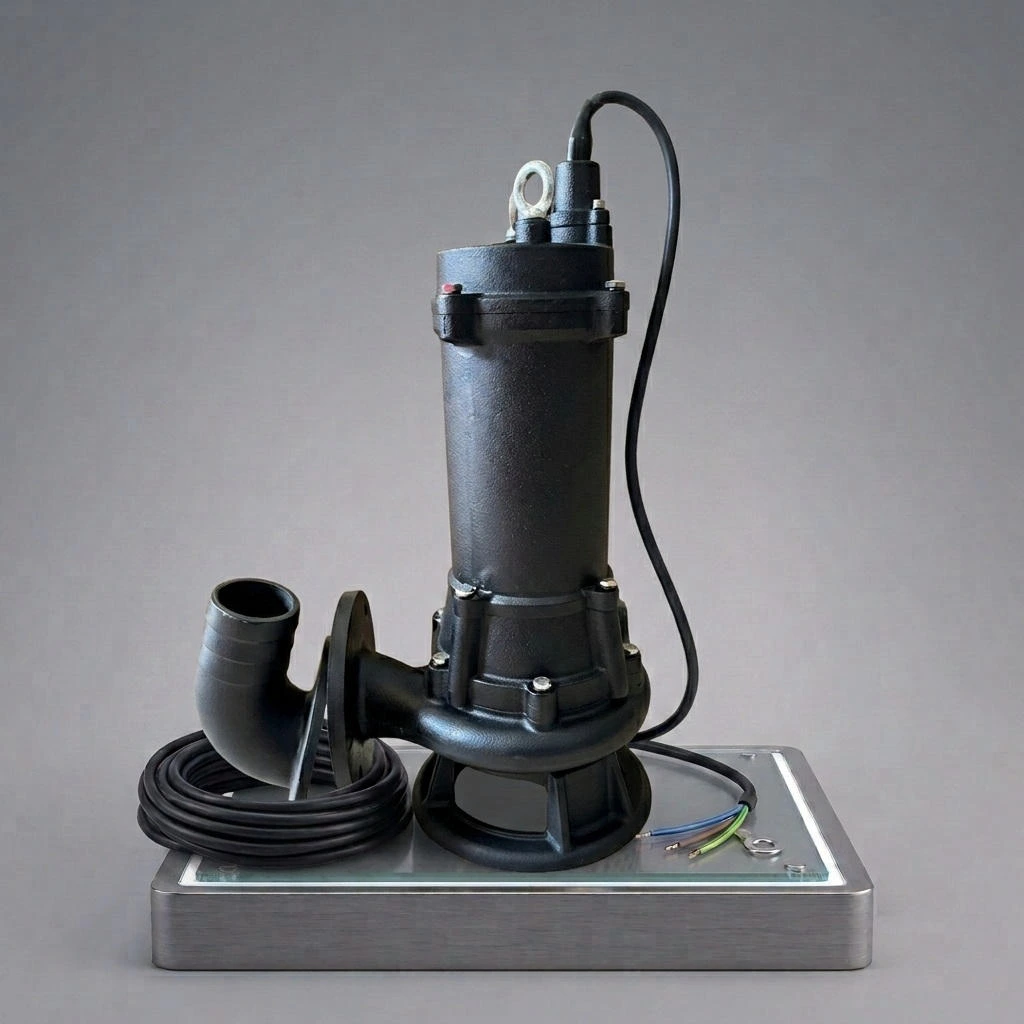
The WC series combines a submersible sewage pump with a cutter for water containing fibrous material. The catalogue spans several discharge sizes and hydraulic curves, allowing the duty point to be checked for wastewater treatment, industrial drainage and agricultural irrigation.
Range technical data
- Power range
- 1.5–110 kW
- Maximum flow
- 2600 m³/h
- Maximum head
- 65 m
- Discharge sizes
- DN50–DN300, by subrange
- Electrical supply
- WCD versions: 1~ 220–240 V where listed; WC: 3~ 380–415 V; 50 Hz
These figures describe the catalogue range or stated subrange. Maximum flow and maximum head/pressure are not a single duty point. Select the exact model from its curve and confirm materials, electrical version and connections.
Series catalogue ↗WC
A closer look at the series
WC is intended for sewage and drainage installations where fibers in the pumped water call for a cutting arrangement. The catalogue identifies cutter-equipped configurations, motor supply alternatives and separate Q–H curves across the range. Construction information includes a cast-iron diffuser and a stainless-steel impeller in the component table.
Hydraulic performance varies across the WC range; select the model by its required duty point. Match the required flow and head to the relevant curve, then confirm discharge connection, electrical supply and the liquid conditions for that specific WC configuration.
Features
- Submersible sewage design with cutter
- Catalogue curves for multiple discharge sizes
- Cast-iron diffuser and stainless-steel impeller
- Single- and three-phase variants identified by code
Applications
- Wastewater treatment plants
- Industrial drainage
- Agricultural irrigation
Materials
Cast-iron ASTM No.30 diffuser and motor casing; AISI 420S45 impeller; graphite–TC mechanical seal. The shaft is listed as AISI 304 SS–ASTM 5140. Confirm the component specification for the chosen WC model.
Operating conditions
Maximum liquid temperature +40 °C. The cutter series can operate in water containing fibres. Single-phase and three-phase versions are distinguished in the model tables.
Construction and application
Before selecting
- Match the required flow and total head to the curve for the exact WC model.
- Check the fibrous content of the liquid and the +40 °C limit.
- Confirm WC or WCD electrical supply and the discharge connection in its table.
Your questions
Series questions
Can WC handle water containing fibres?
Yes. The brochure explicitly lists water containing fibres and identifies WC as a sewage series with a cutter. Check the chosen model and the actual liquid before selection.
Does every WC model have a single-phase equivalent?
Do not assume this. The performance tables distinguish WC three-phase and WCD single-phase models; use the row for the exact model.
Original catalogue
WC / PDF
Start with the discharge-size headings on pages 1–8, then use that subrange’s curve and model row. Confirm whether a WC three-phase or WCD single-phase version is actually listed.
Related series

FS
FS stainless-steel submersible pumps for light sewage
This FS catalogue covers AISI 304 submersible electric pumps for clean or slightly dirty water in domestic, workshop and industrial systems. It specifies solids passage by model and gives separate electrical variants, so the correct configuration depends on both liquid and duty point.

FS-INOX
FS stainless-steel submersible sewage pumps
The FS stainless-sewage range combines a double-channel impeller with AISI 304 wetted components. Its model range addresses clean water and sewage, with passage of suspended solids stated in the catalogue for each configuration rather than assumed across all FS pumps.
KTZ-LH
KTZ-LH submersible drainage pumps
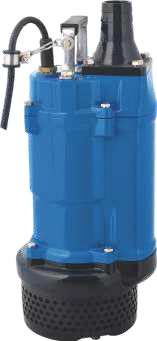
KTZ and LH are submersible drainage pump families for civil engineering, mines and quarries, sewage-treatment plants and general pumping. Their construction and immersion limits must be checked separately for the selected family and model.